Peru: Machu Picchu, Ceviche & The Language of the Incas
When you think of Peru, what comes to mind?
Maybe Machu Picchu hiding in the clouds. Maybe llamas with their elegant, judgmental faces. Or maybe you’ve heard about Peruvian food – which many people say is the best in all of South America.
But Peru is so much more than that. It’s a country where ancient mountains meet modern cities, where the Spanish language mixes with the sounds of Quechua (the language of the Incas), and where every dish tells a story.
Today, we’re diving into three pillars of Peruvian culture:
The food (el ceviche)
The history (Machu Picchu and the Incas)
The language (Quechua words you already know)
¡Vamos a Perú! (Let’s go to Peru!)
The Food – Why Peru is a Chef’s Paradise
Peru has over 3,000 types of potatoes. Yes, 3,000. That’s not a typo. Potatoes were born in Peru thousands of years ago, and Peruvians have been perfecting them ever since.
But the star of Peruvian food is ceviche (pronounced “seh-VEE-cheh”)
What is ceviche?
Fresh raw fish, cut into small pieces, “cooked” in the juice of sour oranges or lime. Mixed with onion, cilantro, and aji (a Peruvian chili pepper). Served with sweet potato and corn.
“Un ceviche bien hecho cambia tu vida.”
“A well-made ceviche changes your life.”
Other Peruvian dishes you need to know:
| Spanish | English description |
|---|
| Lomo saltado | Stir-fried beef with tomatoes, onions, and french fries – served with rice. It’s like Chinese food met Peruvian food and fell in love. |
| Causa | A cold layered “cake” made of yellow potatoes, chicken or tuna, and avocado. |
| Aji de gallina | Shredded chicken in a creamy, slightly spicy yellow pepper sauce. |
| Pisco sour | Peru’s national drink. Pisco (grape brandy) + lime juice + egg white + bitters. Careful – it’s strong! |
Spanish vocabulary for hungry readers:
Tengo hambre – I’m hungry
¿Me recomiendas un plato típico? – Do you recommend a typical dish?
La comida peruana es deliciosa – Peruvian food is delicious
The History – Machu Picchu & The Incas
You cannot talk about Peru without talking about the Incas.
The Inca Empire was the largest empire in pre-Columbian America. At its peak in the 1500s, it stretched from southern Colombia all the way to central Chile. That’s over 2,500 miles of mountains, deserts, and jungles – all connected by an incredible system of roads.
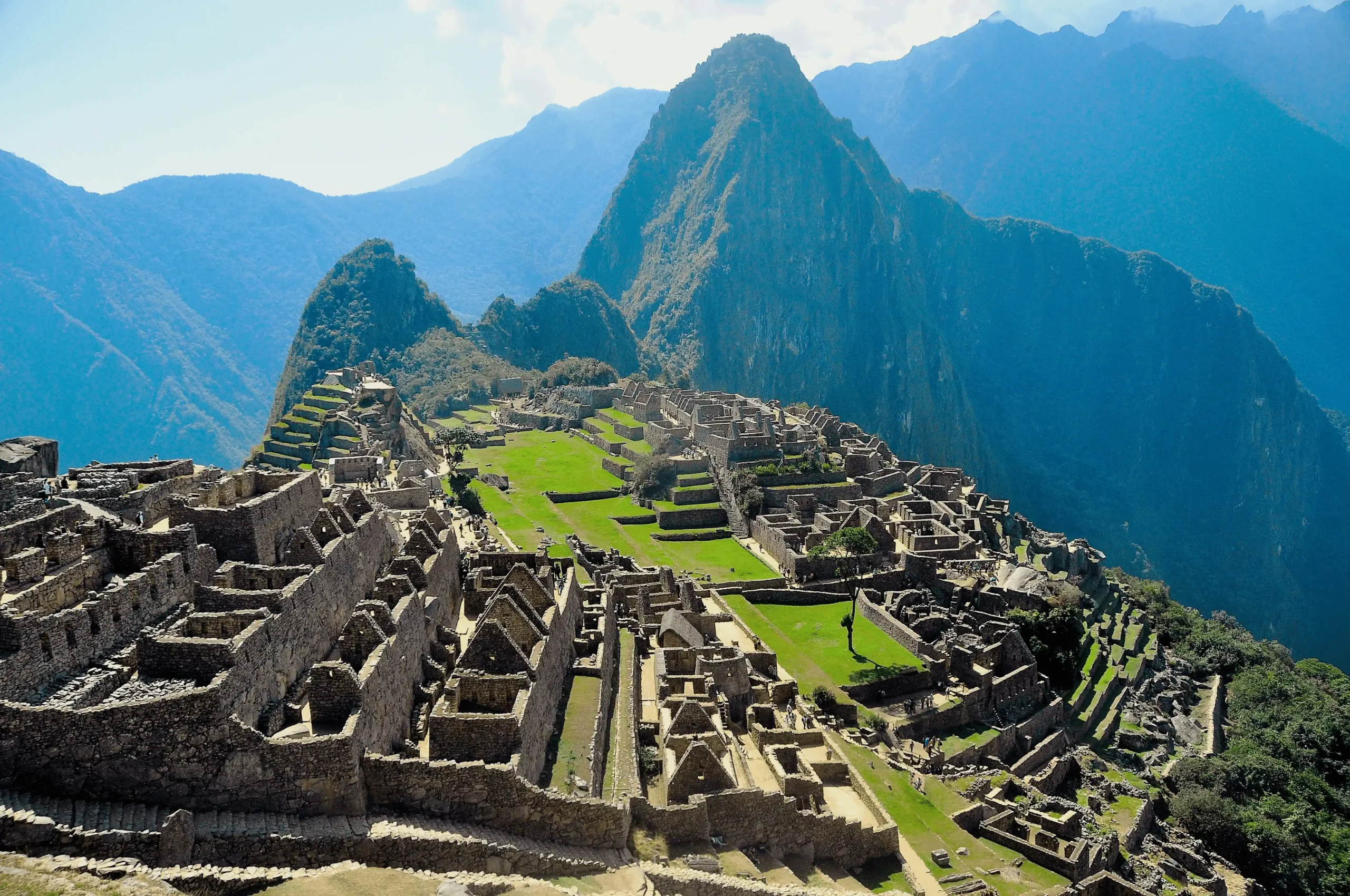
And at the heart of it all? Machu Picchu.
Fast facts about Machu Picchu:
- Built around 1450 AD
- Located 2,430 meters (7,970 feet) above sea level
- Forgotten by the outside world for 400 years
- Rediscovered in 1911 by Hiram Bingham (an American explorer)
- One of the New Seven Wonders of the World
How to say these places in Spanish:
| English | Spanish |
|---|---|
| Machu Picchu | Machu Picchu (same, but pronounced “MAH-choo PEE-choo”) |
| The Inca Trail | El Camino Inca |
| The Sun Gate | La Puerta del Sol |
| The Andes Mountains | Los Andes |
“Machu Picchu no es solo piedras. Es la memoria de un pueblo que supo hablar con las montañas.”
“Machu Picchu is not just stones. It’s the memory of a people who knew how to speak with the mountains.
The Language – Quechua Words You Already Use
Before the Spanish arrived, the Incas didn’t speak Spanish. They spoke Quechua (KEH-chwah). And guess what? You already know some Quechua words.
Common Quechua words in English and Spanish:
| Quechua word | Meaning | Where you’ve heard it |
|---|---|---|
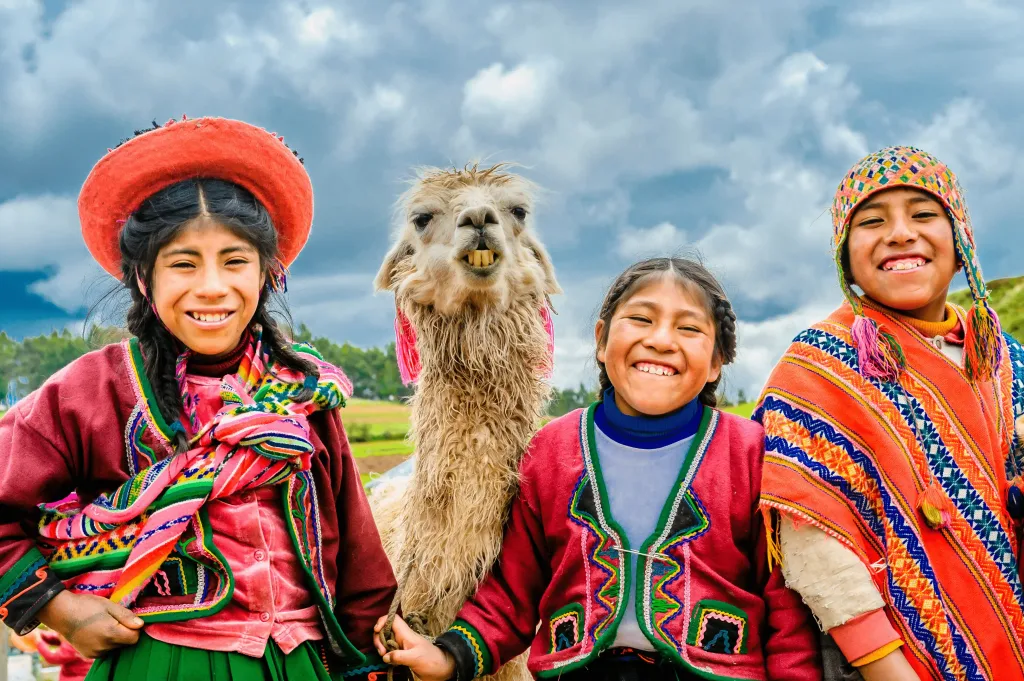
| Llama | The animal | Everywhere! The fluffy, long-necked animal. |
| Puma | A large wild cat | The brand, the animal, the mountain lion. |
| Cóndor | A huge bird | “El Cóndor Pasa” – the famous song. |
| Cancha | Toasted corn | In Peru, you get cancha as a snack with drinks. |
| Chullo | A knitted hat with earflaps | Those colorful Andean hats! |
Three Quechua phrases to impress your friends:
Allillanchu – Hello / How are you? (casual greeting)
Urpi – Dove (also used as a term of endearment like “sweetheart”)
Yaku – Water
Fun fact: The word “Peru” itself might come from Quechua. Some historians say “Pelú” or “Biru” meant “land of abundance” or “river.”