Fascinating Facts About Colombia Every Spanish Learner Should Know
Meta Description: Discover 10 fascinating facts about Colombia, its culture, geography, and traditions while improving your understanding of the Spanish-speaking world.
Colombia: A Country Full of Diversity
When learning Spanish, exploring the cultures of Spanish-speaking countries makes the experience more meaningful. Colombia is one of the most vibrant and diverse countries in Latin America, known for its welcoming people, beautiful landscapes, and rich traditions.
Colombia Has Two Oceans
Colombia is the only South American country with coastlines on both the Pacific Ocean and the Caribbean Sea.
Let’s talk about the eight departments that make up Colombia’s Caribbean Region. Each one has its own capital city, and many of these capitals are famous travel destinations.
- Atlántico is home to Barranquilla, known for its incredible Carnival.
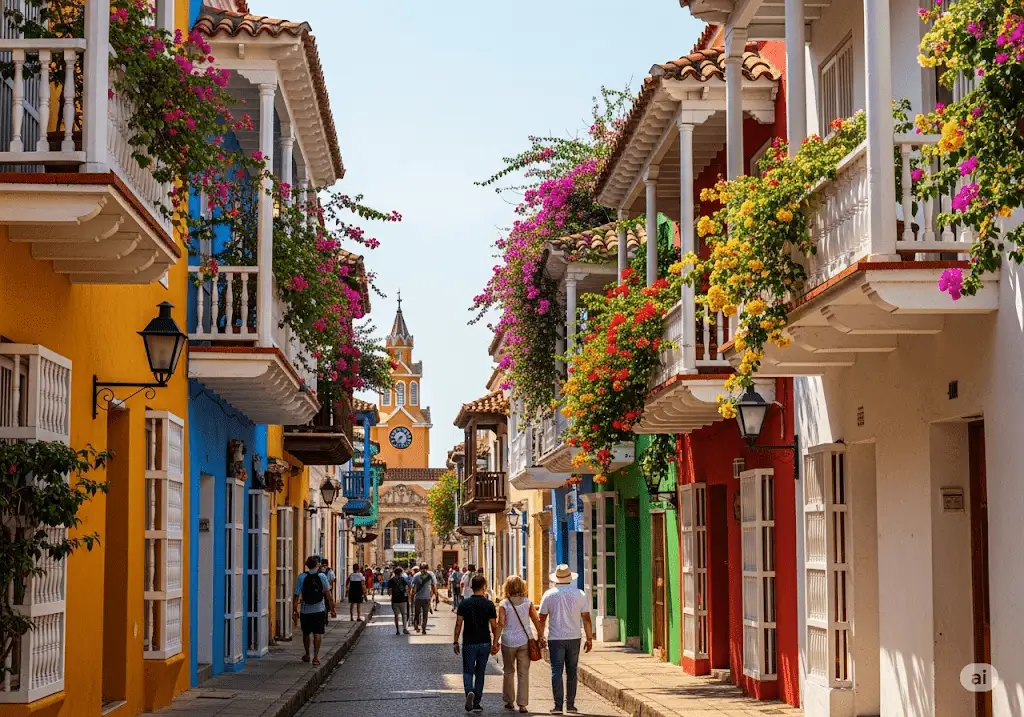
- Bolívar has Cartagena, the beautiful walled city by the sea.
- Cesar’s capital is Valledupar, the birthplace of vallenato music.
- Córdoba’s capital is Montería, often called “The Pearl of the Sinú.”
- La Guajira has Riohacha, a gateway to the desert and Wayuu culture.
- Magdalena’s capital is Santa Marta, home to the highest coastal mountain in the world.
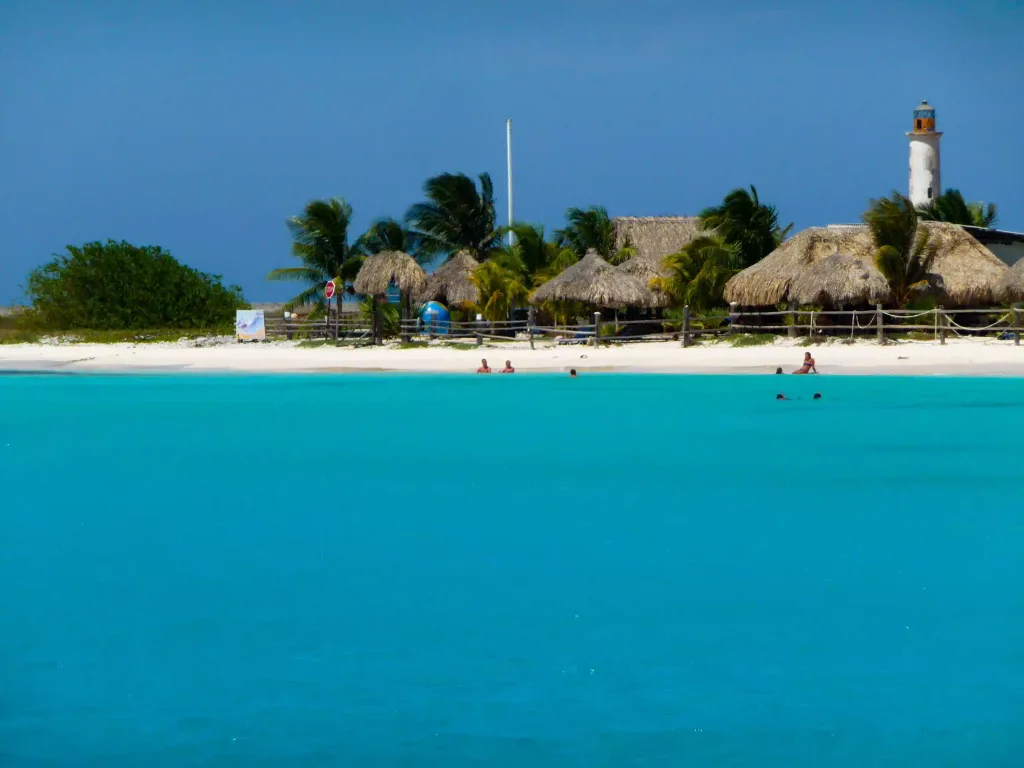
- San Andrés and Providencia has its capital, San Andrés, famous for crystal-clear Caribbean waters.
- Sucre’s capital is Sincelejo, known for its lively corralejas (bullfighting festivals).
The Colombian Caribbean – known locally as Región Caribe – is the beautiful northern coastal region that touches the Caribbean Sea. It’s made up of eight departments and is the second most populated region in Colombia, right after the Andean Region. Around 11 million people call this area home, according to the 2018 Census.
This region covers about 110,000 square kilometers. That includes not only the mainland coast but also the stunning islands of San Andrés, Providencia, and Santa Catalina. The coastline stretches from the Gulf of Urabá all the way to the Gulf of Venezuela. Along this coast you’ll find Colombia’s two biggest Atlantic port cities: Barranquilla and Cartagena.
The eight departments that govern the region are: Atlántico, Bolívar, Cesar, Sucre, Córdoba, Magdalena, La Guajira, and San Andrés and Providencia. Together, they contain around 182 municipalities. And what language do they speak? Most locals speak Caribbean Spanish, but the accent and words can change a little depending on which subregion you’re in.
Home of Magical Realism
The famous writer Gabriel García Márquez was born in Colombia and helped popularize the literary style known as magical realism.
Born in Colombia, Gabriel García Márquez is one of the most influential writers in world literature. Awarded the Nobel Prize in Literature in 1982, he gained international recognition for his unique storytelling style that blends everyday life with fantastical elements. Through acclaimed works such as One Hundred Years of Solitude and Love in the Time of Cholera, he helped popularize magical realism, a literary genre that combines reality with imagination in a seamless and captivating way. His novels, inspired by Colombian history, culture, and traditions, have been translated into dozens of languages and continue to introduce readers around the world to the rich heritage of Colombia.
What is Magical Realism? (¿Qué es el realismo mágico?)
Imagine this:
A priest levitates while drinking a cup of chocolate.
Yellow flowers rain from the sky for an entire day.
A beautiful girl grabs a bedsheet and flies away into the clouds.
These things happen in García Márquez’s most famous book, One Hundred Years of Solitude (Cien años de soledad).
But here’s the magic of magical realism: No one is surprised.
In magical realism, extraordinary events are presented as ordinary. The characters don’t scream or faint. They just say, “Ah, yes. That happens sometimes.”
That’s the difference between fantasy (like Harry Potter) and magical realism. In fantasy, magic is special. In magical realism, magic is just part of life.
Where did Gabo grow up?
García Márquez was born in Aracataca, a small town in the department of Magdalena, in Colombia’s Caribbean Region. That’s the same region we talked about in our previous post – hot, humid, full of rivers, banana plantations, and oral storytelling.
As a child, Gabo listened to his grandmother tell stories where the dead talked to the living, where omens predicted the future, and where ghosts were as real as furniture.
He didn’t invent magical realism from nothing. He grew up inside it.
Here is the most famous opening sentence in Latin American literature. Read it slowly:
“Muchos años después, frente al pelotón de fusilamiento, el coronel Aureliano Buendía había de recordar aquella tarde remota en que su padre lo llevó a conocer el hielo.”
English translation:
“Many years later, as he faced the firing squad, Colonel Aureliano Buendía was to remember that distant afternoon when his father took him to discover ice.”
In just one sentence, García Márquez gives you: time travel, death, memory, childhood, and ice in the tropics. That’s magical realism.
Spanish Vocabulary from this post
| Spanish | English |
|---|---|
| El realismo mágico | Magical realism |
| El escritor / La escritora | The writer |
| La soledad | Solitude |
| El coronel | The colonel |
| El pelotón de fusilamiento | The firing squad |
| El hielo | Ice |
| La abuela | The grandmother |
| Las sábanas | The bedsheets |
Why should YOU care about Gabo?
Because if you want to understand Colombian culture and Caribbean Spanish, you need to understand how Colombians think about reality.
Colombians from the Caribbean coast don’t separate the real from the magical. A ghost story is not “fiction.” It’s just something that happened to a cousin’s friend. A dream can predict the future. A coincidence is never just a coincidence.
When you learn Spanish through Colombian culture, you’re not just learning grammar. You’re learning a way of seeing the world.
Your turn (Tu turno)
Here is a short question for you to answer in the comments (in English or basic Spanish):
If you could add one magical realism event to your normal daily life – what would it be?
For example:
“Every time I lose my keys, they fly back to my hand.”
“My coffee refills itself every morning.”
Write your answer below using one Spanish word from our vocabulary list.
Example comment:
“I want my soledad to turn into a small bird that talks to me.”
Final words from Gabo
“La vida no es la que uno vivió, sino la que uno recuerda y cómo la recuerda para contarla.”
“Life is not what one lived, but what one remembers and how one remembers it in order to tell it.”
That’s magical realism. And that’s Colombia.