Costa Rica: Pura Vida – The Happiest Country in the World
What if there was a country with:
- No army (they abolished it in 1948)
- Free education and healthcare for everyone
- More than 25% of its land protected as national parks
- A philosophy of life so powerful that people use it as hello, goodbye, thank you, you’re welcome, and I love you
That country is Costa Rica.
And that philosophy is Pura Vida..
Lorem ipsum dolor sit amet, consectetur adipiscing elit, sed do eiusmod tempor incididunt ut laborCosta Rica is small – only 51,100 square kilometers (about the size of West Virginia or Lake Michigan). But it contains 6% of the world’s biodiversity. That’s more than all of Europe combined.
Today, we’re going to explore five pillars of Costa Rican culture:
- Pura Vida – the national philosophy
- The Spanish (el español tico – mae, usted y pura vida)
- The food (gallo pinto, casado, and coffee)
- The nature (sloths, toucans, turtles, and volcanoes)
- The traditions (ecotourism, no army, and the happiest people)
¡Pura Vida, maes! (Let’s go to Costa Rica!)e et dolore magna aliqua. Ut enim ad minim veniam, quis nostrud exercitation ullamco laboris nisi ut aliquip ex ea commodo consequat.
- Stick to posting schedules that work
- Giveaways are a great way to get people into your community
- Look into your insights to see when your audience is active on Instagram
- Always be clear on what your CTA is
Pura Vida – More Than a Phrase
Pura Vida literally means “Pure Life.”
But in Costa Rica, it means everything.
| When someone says… | You can respond… |
|---|---|
| “¡Pura Vida!” as a greeting | “¡Pura Vida!” back |
| “¿Cómo estás?” (How are you?) | “¡Pura Vida!” (I’m great!) |
| “Gracias por la ayuda” (Thanks for the help) | “¡Pura Vida!” (You’re welcome!) |
| “Lo siento mucho” (I’m so sorry) | “Está bien, pura vida” (It’s okay, no worries) |
| “Te amo” (I love you) | “Pura vida, mae” (Pure life, dude) |
Where did it come from?
The phrase became popular after a 1956 Mexican movie called “¡Pura Vida!” about happy, carefree people. Costa Ricans loved the phrase so much they adopted it – and expanded it. Now it’s the national motto.
“Pura Vida no es solo una frase. Es una forma de ver el mundo. Es elegir la calma sobre el estrés, la amistad sobre el conflicto, y la naturaleza sobre el dinero.”
“Pura Vida is not just a phrase. It’s a way of seeing the world. It’s choosing calm over stress, friendship over conflict, and nature over money.”
Costa Rican Spanish – El Español Tico
Costa Ricans are called Ticos (for men) and Ticas (for women). Why? Because they add the diminutive -tico instead of -ito to words.
| Standard Spanish | Costa Rican Spanish (Tico) | Meaning |
|---|---|---|
| Chiquito | Chiquitico | Very small |
| Momentito | Momentico | Just a moment |
| Poquito | Poquitico | A very little bit |
The most important Tico word: ¡MAE!
Mae (pronounced “mah-eh”) is the Costa Rican version of dude, bro, or guy. You will hear it constantly.
“¿Cómo está, mae?” (How are you, dude?)
“Mae, ¡qué chiva!” (Dude, how cool!)
The Food – Gallo Pinto, Casado and the Best Coffee
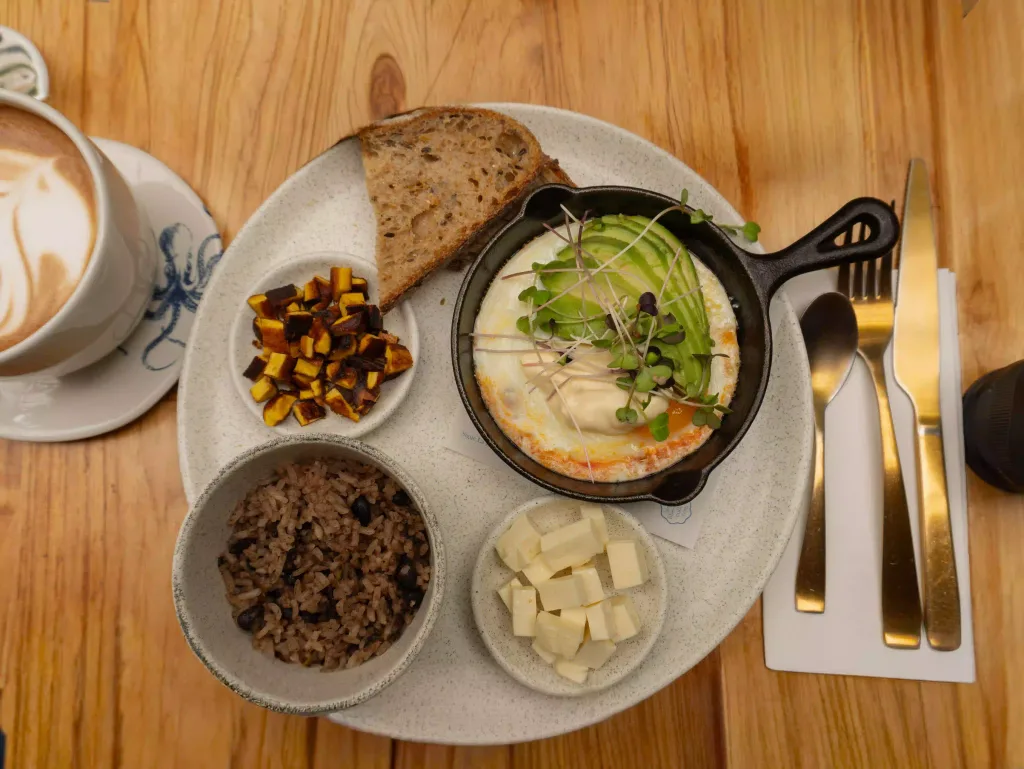
Costa Rican food is simple, fresh, and delicious. It’s not spicy like Mexican food. It’s comforting – like a warm hug on a rainy afternoon (and in Costa Rica, it rains a lot).
The national dish: El Gallo Pinto
Gallo Pinto means “spotted rooster” – named for the speckled look of black beans mixed with white rice.
What’s in it?
- Rice
- Black beans (or red beans)
- Onion, bell pepper, cilantro
- Lizano sauce (a Costa Rican condiment – slightly sweet, slightly tangy – EVERYONE uses it)
How to eat it: For breakfast. Usually served with eggs, fried plantains (maduros), and sour cream (natilla). Sometimes with a side of chorreado (drip coffee).
“El gallo pinto es el desayuno de los campeones – y de todos los ticos también.”
“Gallo pinto is breakfast of champions – and of all ticos too.”
The best coffee in the world?
Costa Rica produces some of the finest coffee on Earth. Why?
- High altitudes (1,200–1,800 meters)
- Volcanic soil (rich in nutrients)
- Strict quality control (only 100% arabica – robusta is illegal)
A law passed in 1989 prohibits farmers from planting anything except 100% arabica beans. That’s dedication.
Coffee vocabulary:akeaways
- Remain Top of Mind
- Be Seen to Sell
- Learn Something New
Coffee vocabulary:
| Spanish | English |
|---|---|
| Un cafecito | A little coffee (said with love) |
| Un chorreado | Drip coffee (traditional – uses a chorreador – a wooden stand with a cloth filter) |
| El grano | The bean |
| La taza | The cup |
Salsa Lizano – the secret ingredient
You cannot understand Costa Rican food without Salsa Lizano. It’s a thin, brown, slightly sweet and tangy sauce – like Worcestershire sauce but less intense. Ticos put it on everything: rice, beans, eggs, meat, even popcorn..
The Nature – Sloths, Toucans, Turtles and Volcanoes
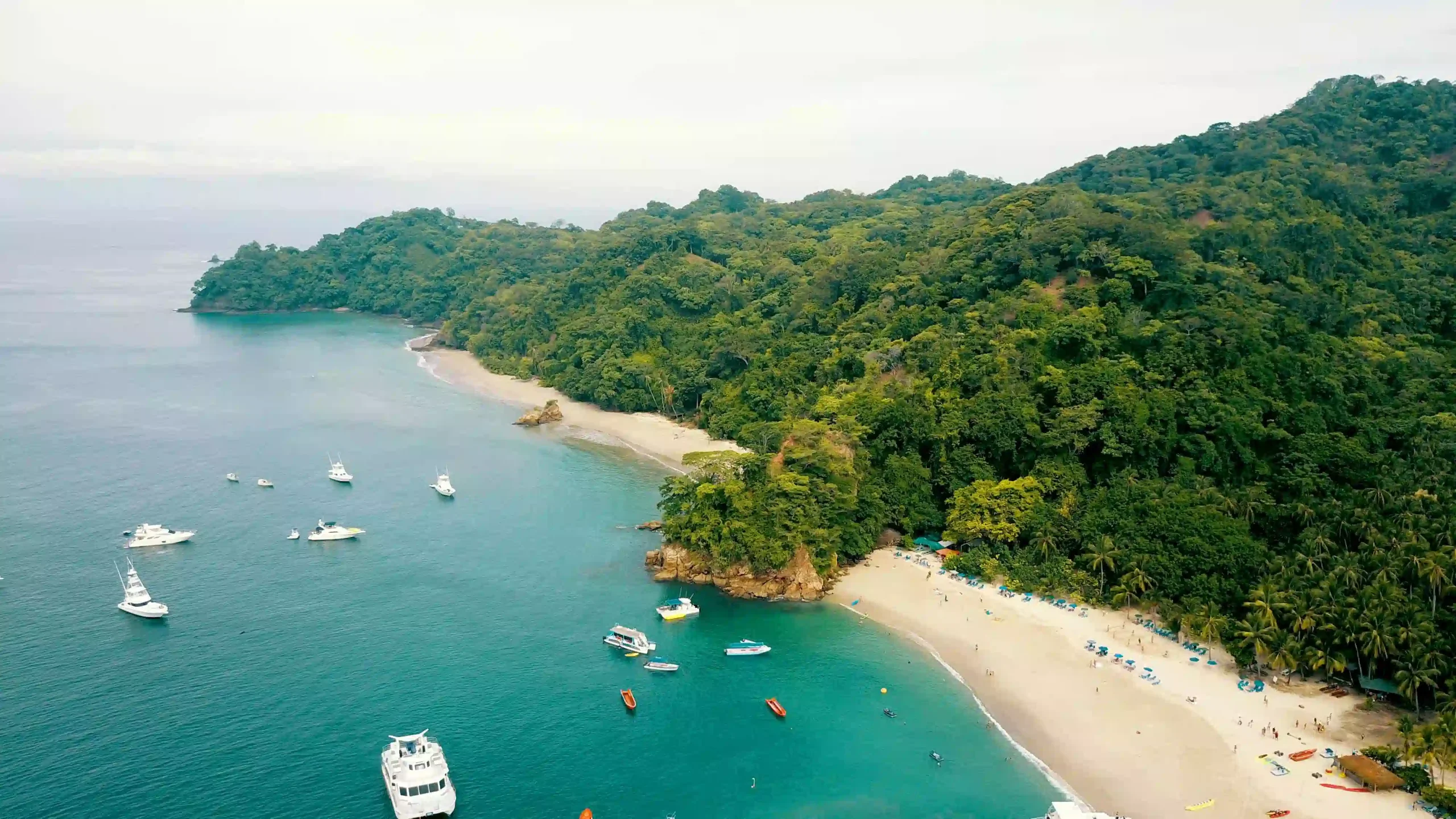
Costa Rica is 25% protected land. That’s 50 national parks, 8 biological reserves, and 13 wildlife refuges.
It’s also the only country in the world that has reversed deforestation. In the 1980s, Costa Rica had the highest deforestation rate in the Americas. Today, thanks to aggressive reforestation programs, the forest cover has grown from 21% to over 52%.
The animals of Costa Rica (that you can actually see):
| Animal | Spanish name | Where to see it |
|---|---|---|
| Sloth | El perezoso (the lazy one) | Manuel Antonio, Tortuguero, La Fortuna |
| Toucan | El tucán | Any rainforest – listen for the croak |
| Scarlet Macaw | La lapa roja | Corcovado, Carara National Park |
| Sea turtle | La tortuga marina | Tortuguero (the name means “place of turtles”) – nesting season July–October |
| Howler monkey | El mono congo | Everywhere – you’ll hear them roar at dawn |
| White-faced monkey | El mono carablanca | Manuel Antonio – they steal your food! |
| Red-eyed tree frog | La rana de ojos rojos | Rainforests – tiny, colorful, iconic |
| Quetzal | El quetzal | Cloud forests (Monteverde, San Gerardo de Dota) – the holy grail for birdwatchers |
“En Costa Rica, los animales no están en jaulas. Tú entras a su casa.”
“In Costa Rica, animals are not in cages. You enter their home.”
The volcanoes:
Costa Rica has over 200 volcanic formations – but only 5 are active.
| Volcano | Height | What’s special |
|---|---|---|
| Arenal | 1,670 m | The most famous. It was active from 1968–2010. Now it sleeps. Perfect cone shape. |
| Poás | 2,708 m | Has one of the largest crater lakes in the world – bright green, acidic, and steaming. |
| Irazú | 3,432 m | The highest active volcano. On clear days, you can see both the Atlantic and Pacific oceans. |
| Rincón de la Vieja | 1,895 m | Has bubbling mud pots, mini geysers, and sulfur lagoons. |