Chile: Desert, Glaciers and the Most Complicated Spanish in the World
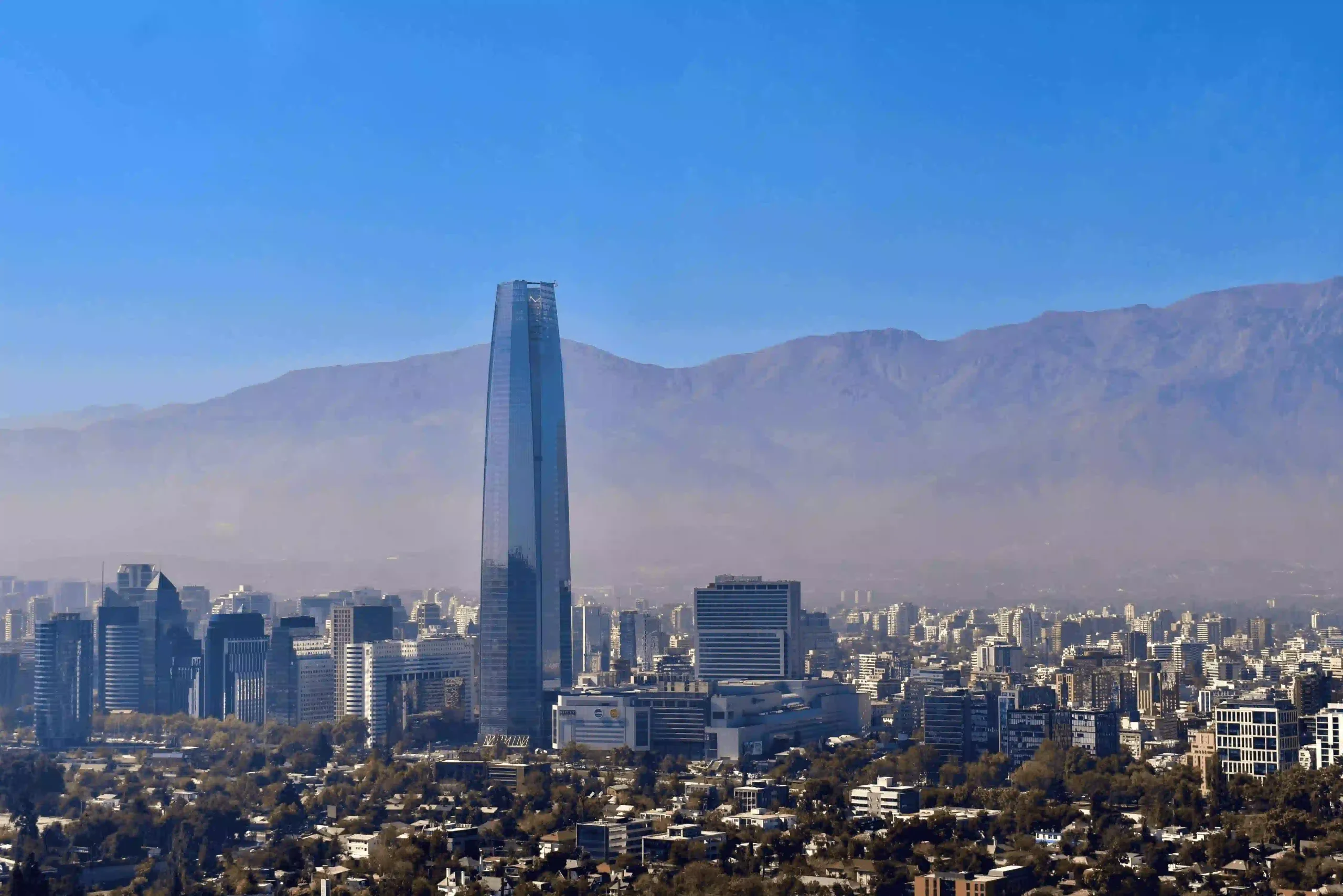
Chile is ridiculously long. Stretching 4,300 kilometers (2,670 miles) from north to south, but only 350 kilometers (217 miles) wide at its broadest point. It’s like a snake attached to the side of South America.
And within that snake? Everything:
- The driest desert in the world (Atacama – some places have never recorded rain)
- Glaciers and fjords in the south
- Wine valleys in the middle
- Easter Island (Rapa Nui) – 3,700 kilometers west, full of giant stone heads
- The Andes mountains as its eastern wall
But for Spanish learners, Chile is famous for one thing: the most difficult accent in the Spanish-speaking world.
Today, we’re going to explore five pillars of Chilean culture:
- Chilean Spanish (why no one understands them)
- The food (empanadas, completo, and seafood)
- The poets (Pablo Neruda and Gabriela Mistral)
- The landscapes (Atacama to Patagonia)
- The traditions (wine, rodeo, and terremoto)
¡Vamos a Chile! (Let’s go to Chile!)
Chilean Spanish – The Final Boss of Spanish Learners
Ask any Spanish speaker: “¿Qué país tiene el español más difícil?”
Most will say: Chile.
Why? Three reasons:
- They speak very fast
- They drop letters (especially the final “S” and “D”)
- They have thousands of unique slang words (chilenismos)
Pronunciation: What disappears
| Standard Spanish | Chilean pronunciation | What happened? |
|---|---|---|
| Estás cansado (You’re tired) | ‘Tái cansao | The S and D disappeared |
| Más o menos (More or less) | Mah o meno | The S is gone |
| Para (For / Stop) | Pa* | Half the word is gone |
| Verdad (Truth) | Verdá | The D is gone |
| Nada (Nothing) | Na | The DA is gone |
Example conversation in Chile:
Standard: “¿Cómo estás? ¿Qué estás haciendo?”
Chilean: “¿Cómo ‘tai? ¿Qué ‘tai haciendo?”
The most famous Chilean word: ¡HUEVÓN!
This word is everywhere. It can mean friend, idiot, dude, or just a filler word. It all depends on tone.
| Tone | Meaning |
|---|---|
| Friendly “Hola huevón” | Hey dude |
| Angry “¡Huevón!” | You idiot! |
| Surprised “¡Huevón!” | No way, dude! |
Essential Chilean slang (Chilenismos):
| Chilean word | What it means | Example |
|---|---|---|
| ¡Huevón! (or weón) | Dude / idiot / friend (everything) | “¿Cómo ‘tai, huevón?” |
| ¡Bacán! | Cool! Awesome! | “Tu auto es bacán” |
| Pololo / Polola | Boyfriend / Girlfriend | “Mi pololo me regaló flores” |
| Carrete | Party (noun) | “Vamos a un carrete el sábado” |
| Carretear | To party (verb) | “Vamos a carretear toda la noche” |
| Fome | Boring | “Esta película es muy fome” |
| Cachai? | You get it? / You know? | “Es complicado, ¿cachai?” |
| Al tiro | Right away / immediately | “Voy al tiro” |
| ¿Cómo ‘tai? | How are you? (from ¿Cómo estás?) | “¿Cómo ‘tai, po?” |
| Po | Particle added for emphasis (from pues) | “Sí, po” (Yes, obviously) |
| La cacha | Wow! (surprise) | “¡La cacha, qué grande!” |
The most important word for learners: ¡CACHAI?
Cachai? comes from the verb cachar (to catch/get it). It’s like saying “you know?” or “get it?” at the end of every sentence.
“Chile es largo y delgado, ¿cachai?”
“Chile is long and thin, you get it?”
The Food – Completos, Empanadas and Sea Urchins
The national dish: El Completo
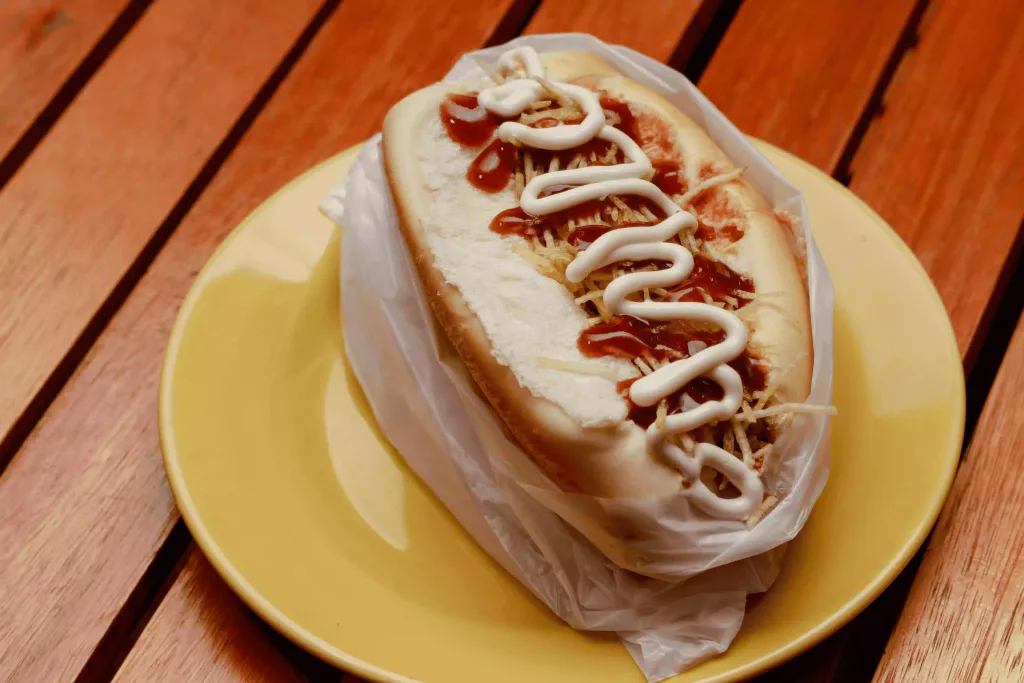
What is it? A hot dog. But not just any hot dog.
A completo has:
- A bun
- A frankfurter sausage
- Tomato (diced)
- Avocado (mashed – they call it palta)
- Mayonnaise
- Sauerkraut (chucrut) – sometimes
- Hot sauce (ají) – sometimes
It’s a mountain of toppings. You need a fork and a napkin. It’s beautiful..
Other Chilean classics:
| Dish | Description |
|---|---|
| Empanadas de pino | Baked empanadas filled with pino (a mix of ground beef, onion, raisins, black olives, and a hard-boiled egg) |
| Pastel de choclo | A corn casserole (like a shepherd’s pie) with ground beef, chicken, raisins, olives, and hard-boiled egg – topped with sweet corn |
| Curanto | From Chiloé island. Meat, seafood, potatoes, and vegetables cooked in a hole in the ground with hot stones |
| Cazuela | A clear soup/stew with chicken or beef, potatoes, corn, pumpkin, and rice |
| Machas a la parmesana | Razor clams baked with Parmesan cheese. From the coast. |
| Erizo | Sea urchin. Eaten raw, right out of the spiny shell. An acquired taste. |
The avocado obsession:
Chileans eat palta (avocado) with almost everything. Breakfast? Bread with palta. Lunch? Salad with palta. Hot dog? Palta. Chile is one of the world’s largest producers of avocados.
Drinks:
| Drink | Description |
|---|---|
| Terremoto (Earthquake) | Pipeño (cheap sweet wine) + pineapple ice cream + fernet (bitter liqueur). Served in a large glass. One is enough. |
| Pisco sour | Same as Peru’s drink – but Chile and Peru fight over who invented it. Chilean pisco is slightly different. |
| Mote con huesillo | A sweet summer drink: wheat grains (mote) + dried peaches (huesillo) + sweet juice. Served with a spoon. |
| Vino | Chile produces excellent wine (Carmenere is the signature grape). The wine valleys: Maipo, Colchagua, Casablanca. |
The Food – Completos, Empanadas and Sea Urchins
Chile has two Nobel Prizes in Literature – more than any other country in Latin America (tied with Mexico).
Gabriela Mistral (1889–1957)
She was the first Latin American woman to win a Nobel Prize (1945). She was a teacher, a poet, and a diplomat. Her poetry is about love, sorrow, motherhood (she never had children), and the beauty of Latin America.
“Yo no soy poetisa. Soy una mujer que canta porque la vida le duele.”
“I am not a poetess. I am a woman who sings because life hurts her.”
Famous poem: “Piececitos” (Little Feet) – about poor children with cold, bare feet.
Pablo Neruda (1904–1973)
The most famous Chilean poet in the world. He won the Nobel Prize in 1971. He wrote about everything: love, politics, the sea, tomatoes, socks, onions.
He also had three houses (all now museums) in three different Chilean cities: Santiago, Valparaíso, and Isla Negra (on the coast). Each house is a ship-themed wonderland full of collections: seashells, figureheads from old ships, bottles, and butterflies.
Famous Neruda poem: “Oda al tomate” (Ode to the Tomato)
“La calle se llena de tomates, mediodía, verano, la luz se parte en dos mitades…”
“The street fills with tomatoes, midday, summer, the light splits in half…”
Another famous line (from “Puedo escribir los versos más tristes esta noche”):
“Es tan corto el amor, y es tan largo el olvido.”
“Love is so short, and forgetting is so long.”