Spain: Flamenco, Tapas and the Night That Never Ends
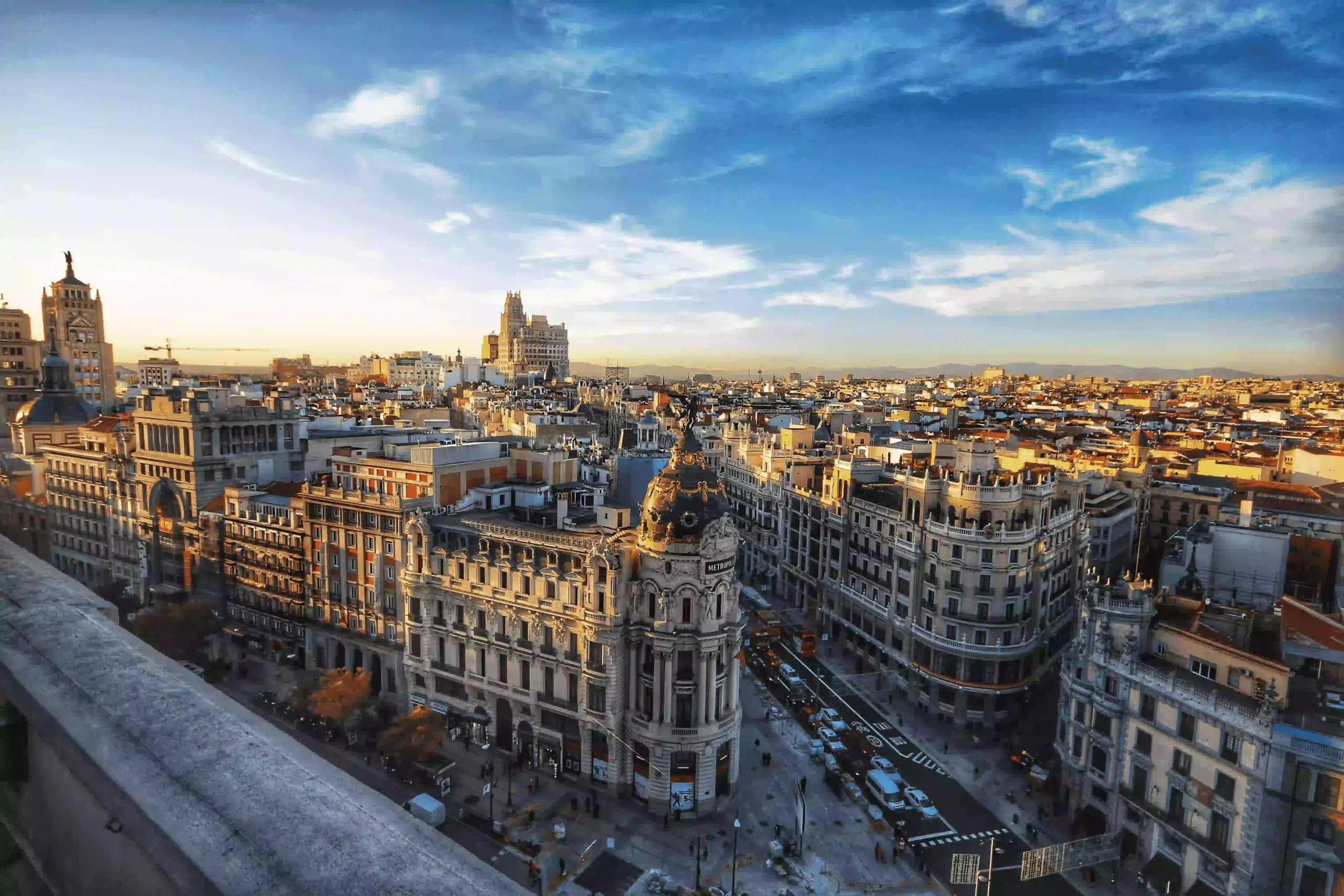
Spain is not one country. It’s many countries inside one.
Each region has its own language, its own food, its own traditions, and sometimes its own flag. The north is green and rainy. The south is hot and dry. The east has beaches. The center has mountains and castles.
But there are a few things that unite all Spaniards:
- They eat dinner at 10 PM (or later)
- They love jamón ibérico (cured ham) more than almost anything
- They take a siesta (nap) in the afternoon – or at least, they used to
- They stay up until 2 AM talking in the streets
- And they have a unique way of speaking that sounds like a lisp (but it’s not!)
Today, we’re going to explore five pillars of Spanish culture:
- The Spanish language (why they say gracias with a lisp)
- The food (tapas, paella, and jamón)
- The dance (flamenco – fire in the feet)
- The traditions (siesta, bullfighting, and La Tomatina)
- The regions (Catalonia, Andalusia, Basque Country and more)
!Vamos a España! (Let’s go to Spain!)
Spanish Spanish – The Lisp That Isn’t a Lisp
You’ve probably noticed: Spaniards say “graTHias” instead of “gracias”. They say “Barthelona” instead of “Barcelona”.
Is that a lisp? No.
It’s called distinción (distinction). In most of Spain, the letters Z and C (before E and I) are pronounced like the English “TH” (as in “think”). The letter S is pronounced normally (like “see”).
The rule:
| Letter | Pronunciation in Spain | Example | Sounds like… |
|---|---|---|---|
| Z | “TH” (as in “think”) | Zapato (shoe) | “THA-pa-to” |
| C (before E or I) | “TH” (as in “think”) | Cerveza (beer) | “THer-VE-tha” |
| S | “S” (normal) | Sopa (soup) | “SO-pa” |
In Latin America: All three (Z, C before E/I, and S) are pronounced as “S”. That’s called seseo.
Example comparison:
| Word | Spain (with distinción) | Mexico / Colombia (with seseo) |
|---|---|---|
| Gracias | “GRA-thyas” | “GRA-syas” |
| Barcelona | “Bar-the-LO-na” | “Bar-se-LO-na” |
| Corazón | “Co-ra-THON” | “Co-ra-SON” |
Other differences: The “you” forms
Spain uses vosotros (informal plural “you”) – a form that doesn’t exist in Latin America.
Other differences: The “you” forms
| Latin America | Spain | |
|---|---|---|
| You (singular informal) | Tú | Tú |
| You (plural informal) | Ustedes | Vosotros |
| You (plural formal) | Ustedes | Ustedes |
Example:
“Vosotros sois mis amigos” (You all are my friends – Spain)
“Ustedes son mis amigos” (Same meaning – Latin America).
Unique Spanish slang (from Spain):
| Spanish word | What it means | Example |
|---|---|---|
| ¡Qué guay! | How cool! | “Tu coche es muy guay” |
| Vale | Okay / Got it (used constantly) | “¿Quedamos a las 8? – Vale” |
| Tío / Tía | Dude / guy / girl (literally “uncle/aunt”) | “¡Tío, no me lo puedo creer!” |
| ¡Ostras! | Wow! / Oh my! (polite surprise) | “¡Ostras, qué grande!” |
| Una caña | A small beer (draft) | “Vamos a tomar una caña” |
| Currar | To work (slang) | “Estoy currando mucho” |
| Mola | It’s cool (from the verb molar) | “Esta música mola mucho” |
The most important word: ¡VALE!
You will hear vale every 30 seconds in Spain. It means “okay,” “got it,” “sure,” or just fills space in conversation.
“Vale, pues nos vemos a las 9. – Vale. – Vale, hasta luego. – Vale, adiós.”
The Food – Tapas, Paella and Jamón Ibérico
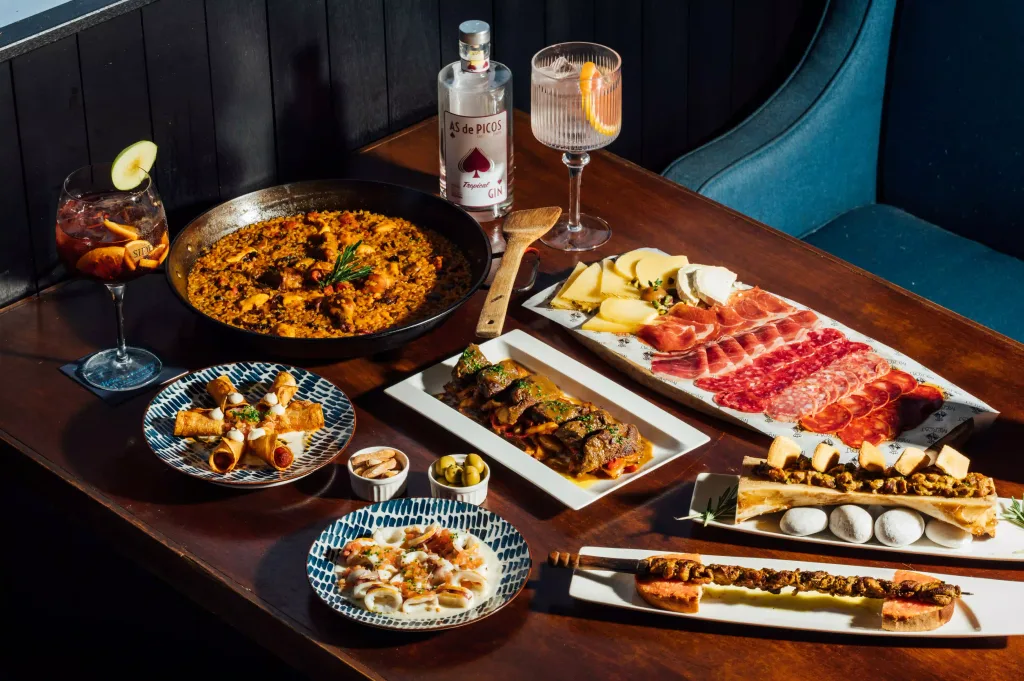
Spanish food is all about sharing and eating late. Lunch is at 2 PM. Dinner at 10 PM. In between? Tapas.
What are tapas?
Small plates of food, meant to be shared. The word tapa means “lid” or “cover.” Legend says bartenders used to cover glasses with a small plate of food to keep flies away – and the tradition was born.
Classic tapas you need to know:
| Tapa | Description |
|---|---|
| Jamón ibérico | Cured ham from black Iberian pigs that eat acorns (bellota). It melts in your mouth. Expensive and delicious. |
| Patatas bravas | Fried potato cubes with a spicy tomato sauce and aioli (garlic mayo). |
| Gambas al ajillo | Shrimp cooked in sizzling garlic and olive oil. |
| Tortilla española (or tortilla de patatas) | Thick egg and potato omelette – no cheese, no onions (sometimes onions – this is a controversial topic in Spain). |
| Aceitunas | Olives – usually green, sometimes stuffed with anchovies or pimento. |
| Calamares a la romana | Fried squid rings. |
| Croquetas | Fried creamy balls of béchamel with ham, chicken, or mushrooms. |
The national dish: Paella
Paella was born in Valencia (east coast of Spain). The original paella has:
- Rice
- Chicken or rabbit
- Green beans (bajoqueta)
- Snails (sometimes)
- Saffron (gives the yellow color)
Important: Authentic paella does NOT have chorizo. That’s a “Spanish” dish invented outside Spain.
Other Spanish classics:
| Dish | Description |
|---|---|
| Gazpacho | Cold tomato soup from Andalusia. Perfect for hot summer days. |
| Pulpo a la gallega | Boiled octopus from Galicia (northwest), served with paprika, salt, and olive oil. |
| Churros con chocolate | Fried dough sticks dipped in thick, rich hot chocolate. Breakfast or midnight snack. |
Drinks:
| Drink | Description |
|---|---|
| Sangría | Red wine mixed with chopped fruit, brandy, and soda. Tourist favorite. |
| Tinto de verano | “Summer red” – red wine mixed with lemon soda (like Sprite). What locals actually drink. |
| Cava | Spanish sparkling wine (like Champagne, but from Catalonia). |
The Dance – Flamenco, Fire in the Feet
Flamenco comes from Andalusia (southern Spain). It was born from the mixing of three cultures: Gypsies (Roma), Arabs, and Sephardic Jews. All of them were outsiders. Flamenco was their cry of pain and joy.
The three parts of flamenco:
| Element | Spanish name | Description |
|---|---|---|
| The song | El cante | Deep, emotional singing – sometimes happy, usually sad |
| The dance | El baile | Powerful footwork (zapateado), graceful arms, intense face |
| The guitar | La guitarra | Fast, rhythmic, passionate |
The feeling of flamenco: Duende
There’s a Spanish word that’s hard to translate: duende. It means the mysterious, emotional power that takes over a performer. When a flamenco singer or dancer has duende, you feel it in your chest. It’s not technique. It’s magic.
“El duende no viene si no ves el peligro.”
“Duende does not come if you don’t see the danger.”
Where to see flamenco: The best places are in Seville, Granada, or Jerez. Look for a tablao (flamenco venue) – small, dark, intimate.
Famous flamenco artists:
- Camaron de la Isla (singer – the greatest)
- Paco de Lucía (guitarist – legendary)
- Antonio Gades (dancer)
- Sara Baras (dancer – still performing)
Spanish for flamenco lovers:
| Spanish | English |
|---|---|
| El flamenco | Flamenco |
| El cante | The singing |
| El baile | The dance |
| La guitarra | The guitar |
| El duende | That magical, emotional spark |
| ¡Olé! | Cheer shouted during flamenco (and bullfighting) |
Final words from a Spanish poet (Federico García Lorca)
“España no es un país. España es una piel de toro estirada sobre un corazón que late en mil direcciones.”
“Spain is not a country. Spain is a bull’s hide stretched over a heart that beats in a thousand directions.”