Guatemala: Volcanes, Jade y El Corazón del Mundo Maya
“Guatemala: Volcanoes, Jade and the Heart of the Mayan World”
What do you know about Guatemala?
Maybe not as much as Mexico or Peru. And that’s a shame – because Guatemala is one of the most magical countries in Latin America.
Here are some quick facts to wake up your curiosity:
- It has 33 volcanoes (3 of them are active right now)
- It was the heart of the Mayan civilization
- It has the most colorful market you will ever see (Chichicastenango)
- And its national bird is the quetzal – a bird so beautiful that its feathers were used as money by the ancient Maya
Guatemala’s nickname is “El Corazón del Mundo Maya” (The Heart of the Mayan World). And today, we’re going to explore why.
¡Vamos a Guatemala! (Let’s go to Guatemala!)
Sed arcu non odio euismod lacinia. Sit amet cursus sit amet dictum sit. Nunc pulvinar sapien et ligula ullamcorper. Pellentesque diam volutpat commodo sed egestas. Tellus elementum sagittis vitae et leo duis ut diam quam. Eleifend donec pretium vulputate sapien nec sagittis aliquam malesuada bibendum. At risus viverra adipiscing at in tellus. Duis at tellus at urna condimentum mattis pellentesque.
The Maya – An Ancient Culture Still Alive
Most people think the Maya disappeared centuries ago, like the dinosaurs or the Roman Empire.
That’s not true.
There are more than 6 million Maya living in Guatemala today. They speak 21 different Mayan languages (plus Spanish). They wear traditional clothing (traje típico) that tells you which village they come from just by looking at the colors and patterns.
The most famous Mayan site: Tikal
Deep in the jungle of northern Guatemala lies Tikal (tee-KAHL). It’s one of the largest archaeological sites in the world. Giant temples rise above the rainforest canopy. Howler monkeys scream from the trees. And if you climb to the top of Temple IV, you can see nothing but green jungle in every direction.
- Stick to posting schedules that work
- Giveaways are a great way to get people into your community
- Look into your insights to see when your audience is active on Instagram
- Always be clear on what your CTA is
“Tikal no es solo ruinas. Tikal es una ciudad que nunca durmió.”
“Tikal is not just ruins. Tikal is a city that never slept.”
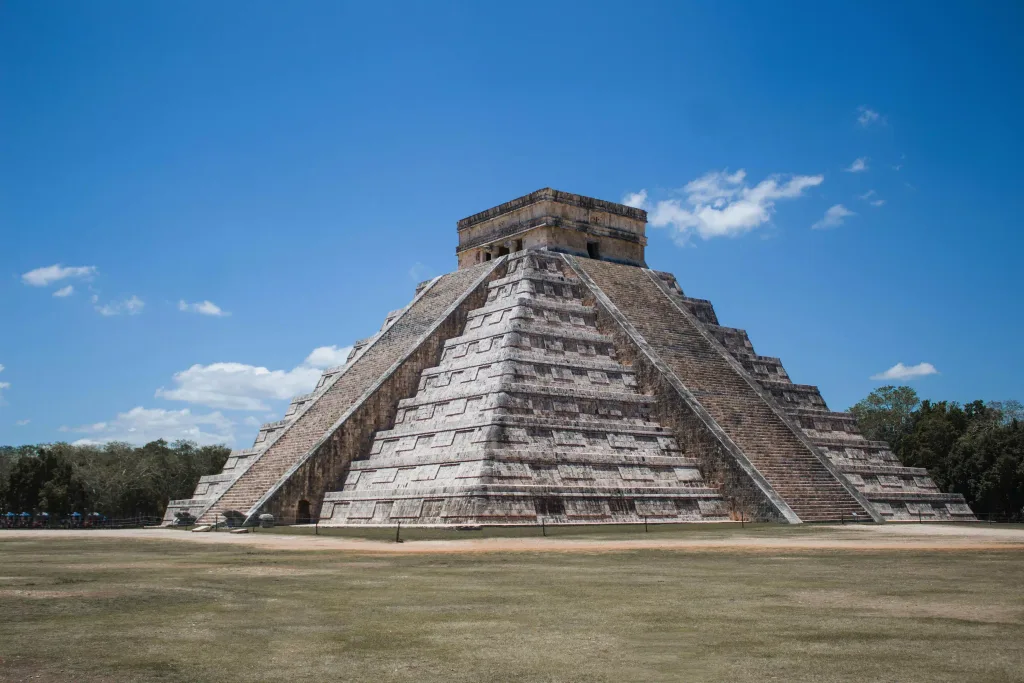
Spanish vocabulary for history lovers:
| Spanish | English |
|---|---|
| La pirámide | The pyramid |
| La selva | The jungle |
| Los mayas | The Mayans |
| El templo | The temple |
| El monolito | The carved stone monument |
The Textiles – A Language Made of Thread
One of the most beautiful things about Guatemala is the clothing.
Each Mayan village has its own traje típico (traditional outfit). The colors, the patterns, the symbols – they all mean something.
- Red might represent the east and the sunrise
- Blue might represent the sky and water
- A diamond pattern might represent the world (four corners, four directions)
Women can spend 6 months weaving a single huipil (the traditional blouse) on a backstrap loom – the same technology the Maya have used for over 2,000 years.
Where to see the best textiles?
The market of Chichicastenango (pronounced “chee-chee-kahs-ten-AN-go”) happens every Thursday and Sunday. Locals call it “Chichi” for short.
“En Chichi, los colores tienen voz.”
“In Chichi, the colors have a voice.”
You can buy textiles, masks, jade, and fresh fruit. But remember: bargaining (regatear) is expected. It’s not rude – it’s part of the culture.
Spanish for shopping:
¿Cuánto cuesta? – How much does it cost?
¿Me puede dar un descuento? – Can you give me a discount?
Es muy bonito, pero es caro – It’s very beautiful, but it’s expensive.
Está bien, lo compro – Okay, I’ll buy it.
The Volcanoes – Active, Beautiful and a Little Scary
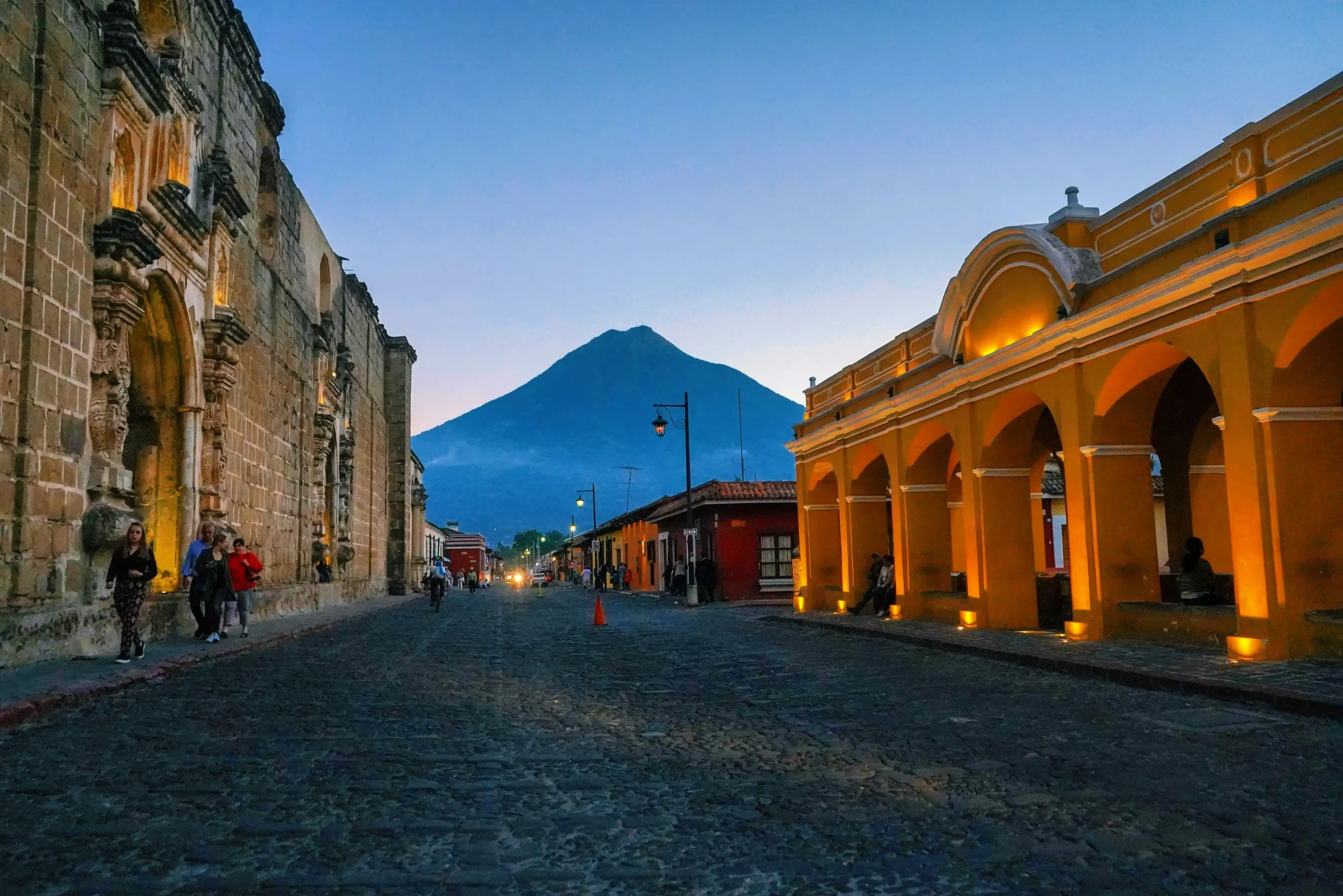
Guatemala has 33 volcanoes. Three of them are active:
| Volcano | Height | Last eruption | Fun fact |
|---|---|---|---|
| Fuego | 3,763 m | Right now! (always active) | Its name means “fire.” You can see red lava at night. |
| Pacaya | 2,552 m | 2024 | You can roast marshmallows on volcanic heat vents. Seriously. |
| Santiaguito | 2,500 m | Daily small eruptions | Located near the city of Quetzaltenango (Xela). |
The most famous volcano hike: Acatenango
Acatenango is not active – but it sits right next to Fuego. You hike up Acatenango during the day, set up camp at night, and then watch Fuego erupt every 15–30 minutes. Red lava shooting into the dark sky. Thunder rumbling under your feet.
“Ver un volcán activo de noche cambia tu forma de entender el planeta.”
“Seeing an active volcano at night changes the way you understand the planet.”
Spanish for adventurers:
Tengo miedo – I’m scared
¡Qué impresionante! – How impressive!
La lava es roja – The lava is red
Hace frío en la cima – It’s cold at the summit
Guatemalan Spanish – Clear, Slow and Beautiful
Guatemalan Spanish is considered one of the easiest accents to understand for Spanish learners. Why?
- They speak more slowly than Spaniards or Argentinians
- They pronounce all the letters (no eating the “S” like in the Caribbean)
- They use vos (a special “you” form) but it’s easy to learn
Unique Guatemalan words you need to know:
| Guatemalan Spanish | What it means | Example |
|---|---|---|
| ¡Patojo! | Kid / young person | “Oye, patojo, ven acá” (Hey kid, come here) |
| Cerote | Friend / dude (very informal, careful!) | “¿Qué onda, cerote?” (What’s up, dude?) |
| Chucho | Dog (slang) or also means “jail” | “Mi chucho se escapó” (My dog ran away) |
| Boquitas | Snacks / appetizers | “Vamos por unas boquitas” (Let’s go get some snacks) |
| ¡Huevos! | Wow! / For real! (literally “eggs”) | “Gané la lotería – ¡huevos!” (I won the lottery – wow! |
The most important word: ¡Púchica!
This is the quintessential Guatemalan expression. It’s a soft, polite way to say “darn!” or “oh my!” – used when you’re surprised, annoyed, or excited.
“¡Púchica! Se me olvidó la cartera.”
“Oh shoot! I forgot my wallet.”
“Guatemala es un país de contrastes. Volcanes de fuego y lagos de jade. Mercados llenos de color y selvas llenas de silencio. Vivir aquí es aprender a escuchar la tierra.”
“Guatemala is a country of contrasts. Volcanoes of fire and lakes of jade. Markets full of color and jungles full of silence. Living here is learning to listen to the earth.“