Bolivia: The Salt Desert, Two Capitals and the Heart of Indigenous South America
What if a country had:
Two capitals (La Paz and Sucre)
The largest salt flat in the world (visible from space)
A lake with pink flamingos at 3,800 meters altitude
A road so dangerous it’s called “Death Road”
More than 30 official languages (Spanish plus 36 indigenous languages)
That country is Bolivia.
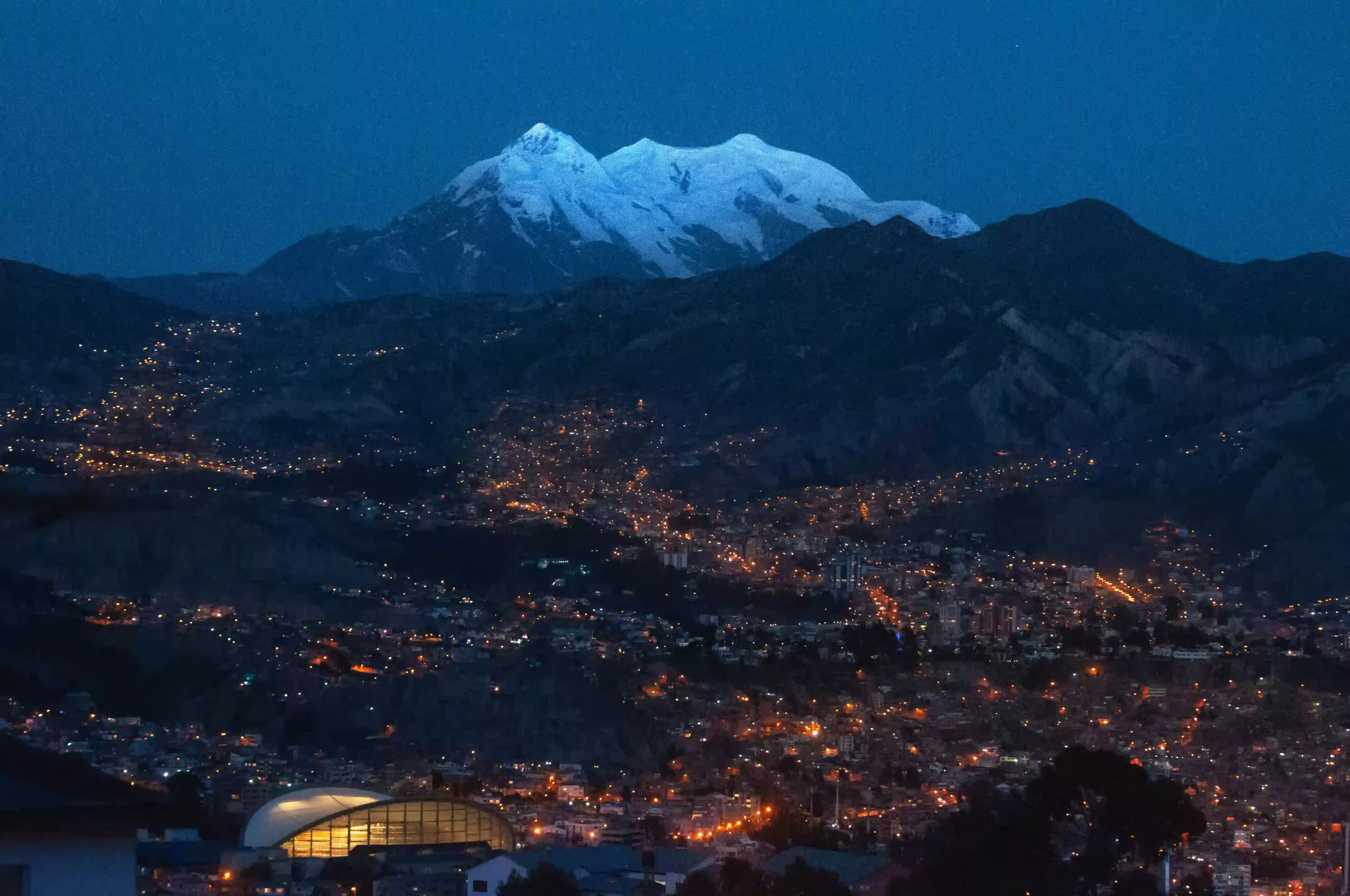
Named after the liberator Simón Bolívar, Bolivia is the highest country in the Americas. Its constitutional capital, Sucre, sits at 2,800 meters. Its seat of government, La Paz, is at 3,650 meters – the highest capital city in the world..
Bolivia is also the most indigenous country in South America. More than 60% of Bolivians identify as indigenous, primarily Quechua and Aymara. Their culture, clothing, language, and traditions are not a museum piece – they are alive and everywhere.
Today, we’re going to explore five pillars of Bolivian culture:
- The land (Salar de Uyuni, Lake Titicaca, and Death Road)
- The indigenous heart (Quechua, Aymara, and the cholitas)
- The Spanish (how Bolivians speak – vos, po, and indigenous words)
- The food (salteñas, api, and quinoa)
- The traditions (Carnaval de Oruro, Tinku, and the Wiphala flag)
¡Vamos a Bolivia! (Let’s go to Bolivia!)
The Land – Salt, Sky and Danger
Bolivia is landlocked – it lost its coast to Chile in the War of the Pacific (1879–1884). Bolivians still celebrate “Día del Mar” (Day of the Sea) every year, dreaming of getting their coastline back.
But what Bolivia lacks in beaches, it makes up in geographical wonders.
Salar de Uyuni – The Mirror of the Sky
The Salar de Uyuni is the largest salt flat on Earth. It covers 10,582 square kilometers (4,086 square miles) – bigger than the state of Delaware.
In the dry season (May to November), it’s a blinding white desert of hexagonal salt patterns. You can take perspective-bending photos where people look like tiny figures on a white ocean.
In the rainy season (December to April) , a thin layer of water covers the salt. And then… magic. The water turns into a perfect mirror, reflecting the sky. You cannot tell where the earth ends and the sky begins.
“El Salar no es un lugar. Es un espejo donde el cielo se mira a sí mismo.”
“The Salar is not a place. It’s a mirror where the sky looks at itself.”
Under the salt? The world’s largest lithium reserves (lithium is used for electric car batteries). Bolivia sits on top of the green energy future.
Lake Titicaca (Lago Titicaca)
The highest navigable lake in the world – 3,812 meters (12,507 feet) above sea level. Shared with Peru.
According to Inca mythology, the Sun God Inti created the first Incas on the Island of the Sun (Isla del Sol) in this lake.
The water is cold, the sky is blinding blue, and the altitude makes you breathe slowly.
The Yungas Road – Death Road (Camino de la Muerte)
From La Paz to Coroico: 64 kilometers (40 miles) of narrow, unpaved road clinging to cliffs with 1,000-meter drops with no guardrails. Fog, rain, landslides, and oncoming traffic.
It was called “the world’s most dangerous road.” Hundreds of people died every year.
Today, a new bypass road exists – so the old Death Road is now a mountain bike tourist attraction. Thousands of adrenaline junkies ride it every year. Most survive.
“El Camino de la Muerte te enseña dos cosas: que tienes miedo a morir, y que te encanta vivir.”
“Death Road teaches you two things: that you are afraid to die, and that you love to live.”
The Altiplano (The High Plateau)
The vast, cold, windswept high plain between the Andes mountains. Average elevation: 3,750 meters. Home to llamas, alpacas, vicuñas, and three species of pink flamingos that live in red lagoons (colored by algae and minerals).
Spanish for travelers:
| Spanish | English |
|---|---|
| El salar | The salt flat |
| El espejo | The mirror |
| El lago | The lake |
| El altiplano | The high plateau |
| El flamenco rosado | The pink flamingo |
| La altura | The altitude |
The Indigenous Heart – Quechua, Aymara and Cholitas
Bolivia is the most indigenous country in South America.
Other indigenous groups (Guaraní, Chiquitano, etc.) – 5%
Quechua – 30% of Bolivians
Aymara – 25% of Bolivians
Only about 40% of Bolivians identify as “mestizo” (mixed) or white. This is the opposite of countries like Argentina or Costa Rica.
The Cholitas (The Indigenous Women of Bolivia)
The cholita – an indigenous Aymara or Quechua woman – is an icon of Bolivia. You can recognize her by her traditional clothing:
| Clothing item | Spanish name | Description |
|---|---|---|
| The bowler hat | El bombín | A small, round hat – originally from Europe. Cholitas wear it tilted. |
| The pleated skirt | La pollera | Colorful, layered, voluminous skirts. |
| The shawl | La manta | A rectangular woven cloth over the shoulders. |
| The petticoat | El enagua | Multiple layers underneath the pollera. |
| The sandals | Las ojotas | Simple sandals – sometimes gold or silver-colored now. |
Why the bowler hat?
In the 1920s, a shipment of bowler hats was sent to Bolivia for European railroad workers. The hats were too small. A local merchant sold them to indigenous women. They became fashionable. Now they are the symbol of the cholita.
Cholitas today:
- They are entrepreneurs (many run market stalls, restaurants, or tour companies)
- They are wrestlers (Cholitas Wrestling in El Alto – women in polleras and bombines fighting in a ring)
- They are climbers (a group of cholitas summited Mount Aconcagua – the highest peak in the Americas)
- They are politicians (Evo Morales, the first indigenous president of Bolivia, was Aymara)
“La cholita no es un disfraz. Es una mujer que sabe quién es y de dónde viene.”
“The cholita is not a costume. She is a woman who knows who she is and where she comes from.”
The Traditions – Carnaval de Oruro, Tinku and Alasitas
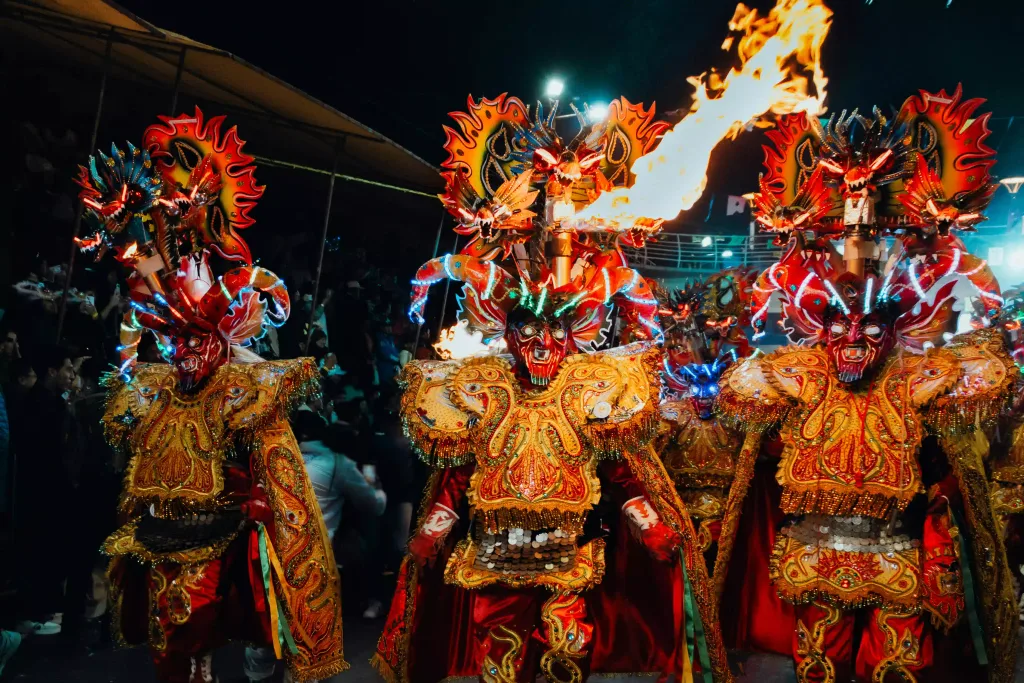
Carnaval de Oruro
UNESCO World Heritage. The largest and most spectacular carnival in the Andes.
What happens? A 20-hour, 4-kilometer procession of 50,000 dancers and 10,000 musicians in elaborate devil costumes (diabladas).
The story: The Archangel Michael fights the seven deadly sins (represented by devils) – and good triumphs.
The most famous dance: La Diablada (The Devil Dance) – dancers wear massive, ornate devil masks with multiple horns, snakes, and glittering mirrors.
“En Oruro, el diablo baila y la virgen llora. La tierra tiembla y el cielo aplaude.”
“In Oruro, the devil dances and the virgin cries. The earth trembles and the sky applauds.”
Tinku (The Ritual Battle)
Tinku means “encounter” in Quechua. It is a ritual combat between communities in the Potosí region.
What happens? Men (and sometimes women) from different villages face each other and… fight. With fists. Sometimes with sticks or stones. Blood is drawn. Injuries happen. Sometimes, historically, deaths.
Why? Tinku is an offering to Pachamama. Blood fertilizes the earth. The violence is a form of prayer for good harvests.
Today, Tinku has become more controlled and touristic – but it still happens. It is not a performance. It is real.
Alasitas (The Festival of Miniatures)
Every January 24th in La Paz, people buy tiny miniature versions of things they want in the coming year: houses, cars, money, diplomas, travel tickets, even marriage certificates.
The ritual:
- Buy the miniature (for example, a tiny $100 bill)
- Take it to a yatiri (Aymara healer)
- The yatiri blesses it
- You believe that – in the coming year – your miniature will become real
The god of abundance is Ekeko (the Aymara god of prosperity). You see his statue everywhere during Alasitas, stuffed with miniature cigarettes, tiny food, and miniature money.
Day of the Skulls (Día de los Ñatitas)
Every November 8th, Bolivians take human skulls (ñatitas – “little snub-noses”) to the cemetery. They decorate them with flowers, sunglasses, hats, and cigarettes. They pray to them. They ask for favors.
Why? A pre-Columbian tradition. The ñatitas are spirits that can intercede with the afterlife. You can even “rent” a ñatita for a year and bring her offerings.
This is not Halloween. This is Bolivia.